
Dundalk · Baltimore, MD
Bridgework in Dundalk
A fixed replacement anchored to the teeth either side of a gap.
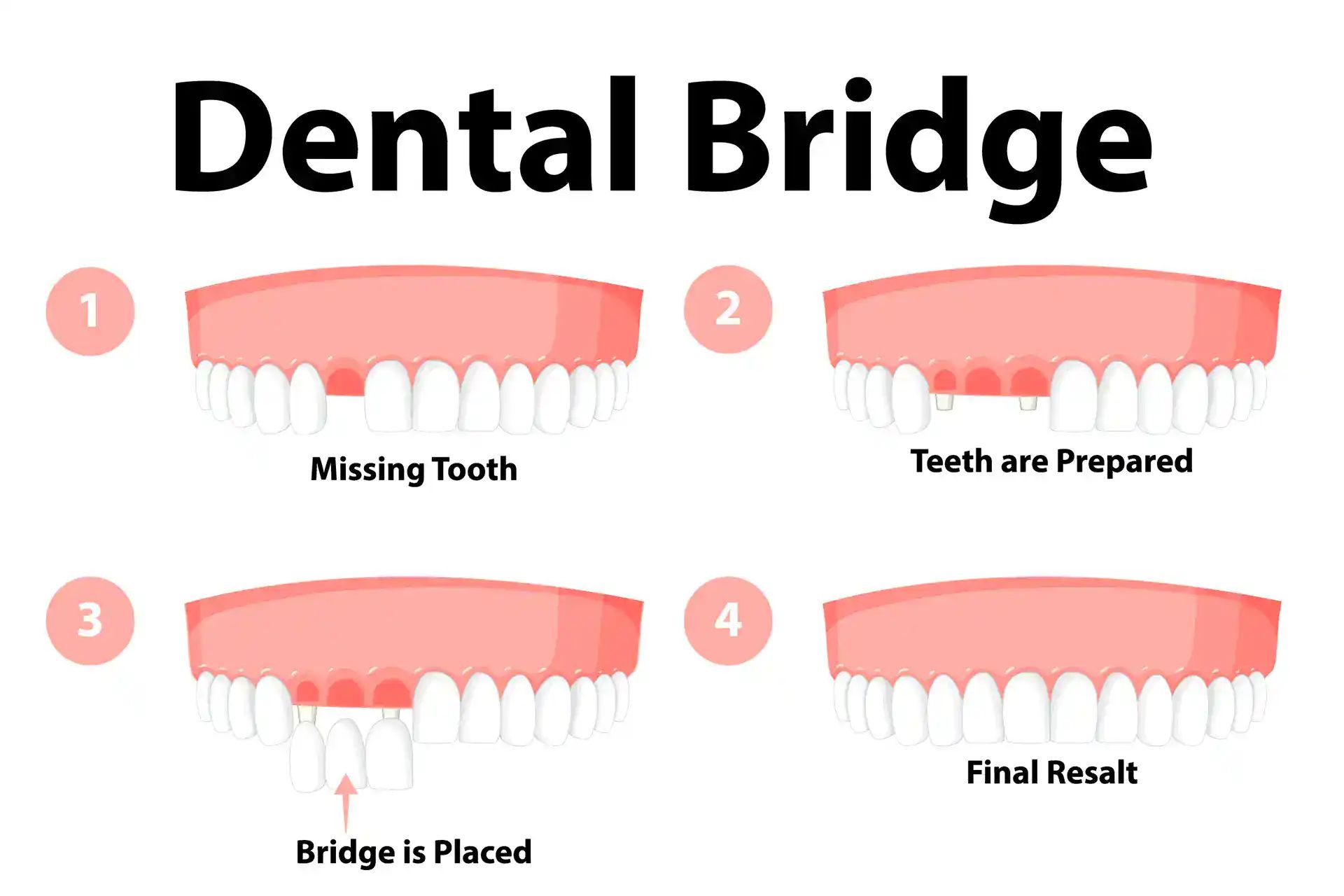
What a bridge is
Why a gap is worth filling
What happens at your appointment
Bridge or implant
Not sure this is the right answer for you? Dr. Truong will tell you either way.
Request an appointmentIs a bridge right for you?
Dr. Truong will talk through a bridge, an implant or a partial denture with you. These are the things that decide it.
Usually a good fit
- You are missing one or more teeth in a row.
- The teeth on either side of the gap are healthy enough to hold crowns.
- You want something fixed in place, not a denture you take out.
- You'd rather not wait months for an implant to heal.
Worth talking through first
- The teeth either side of the gap have to be shaped down to take the crowns.
- If those teeth are healthy and untouched, an implant leaves them alone. It takes longer, though, and needs enough bone.
- A bridge is only as strong as the teeth holding it, so those teeth need to stay healthy.
What happens, step by step
A bridge usually takes two visits, much like a crown.
Preparing the supporting teeth
The teeth either side of the gap are shaped to take crowns.
Measuring
The teeth are measured, so the bridge can be made to fit.
A temporary bridge
A temporary bridge protects the teeth while yours is made.
Fitting
At the second visit, the finished bridge is cemented in.
Looking after a bridge
Day to day
- Brush twice a day and floss once a day. The teeth under the crowns can still decay where the crown meets the tooth.
- Keep your regular checkups. The bridge depends on the teeth holding it.
Call us if
- The bridge feels loose or comes off.
- Your bite feels wrong.
- A supporting tooth hurts and over-the-counter pain relief doesn't help.
Cost, insurance and financing
Insurance
We accept most major dental insurance, including Maryland Healthy Smiles. What a plan pays toward this treatment varies, so call 410-284-1414 and ask about yours.
See the plans we acceptMonthly payments
You can spread the cost over monthly payments through Cherry, a patient financing company.
How financing worksQuestions about bridges
Does a bridge come out?
No. It's cemented in, so it doesn't come out for cleaning the way a partial denture does. Only a dentist can remove it.
Why fill the gap at all?
Missing teeth can make chewing and speaking harder. The teeth beside a gap also lean into it, and the tooth above or below drifts into the space, which changes how your bite meets.
Bridge or implant?
A bridge leans on the teeth either side, which have to be shaped down. An implant stands on its own and leaves those teeth alone, but it takes longer and needs enough bone.
What is a bridge made of?
Porcelain, metal alloys, or a combination. Dr. Truong will tell you which suits your case.
Related treatments
Sources: American Dental Association, MouthHealthy, "Bridges"; MedlinePlus (U.S. National Library of Medicine), "Dental crowns," reviewed 14 October 2024. Both checked 23 October 2026. Practice details are from this website. Last reviewed October 2026.