Dundalk · Baltimore, MD
Dental Bonding in Dundalk
Resin shaped onto a chip, a gap or a stain, usually in one visit.
What bonding is
What it is used for
When it is the right choice
How it compares to a veneer
Not sure this is the right answer for you? Dr. Truong will tell you either way.
Request an appointmentIs bonding right for you?
Bonding is the quickest and least invasive of the cosmetic options.
Bonding works well for
- Chipped corners or small cracks.
- A tooth that sits shorter than the one beside it.
- A small gap you'd like to close.
- Discoloration that whitening hasn't reached.
Worth talking through first
- Composite is softer than porcelain. It picks up stain and can chip, so it's usually redone sooner than a veneer.
- Across several front teeth, veneers tend to hold up longer.
- Whitening won't change the color of bonding afterward.
What happens at the appointment
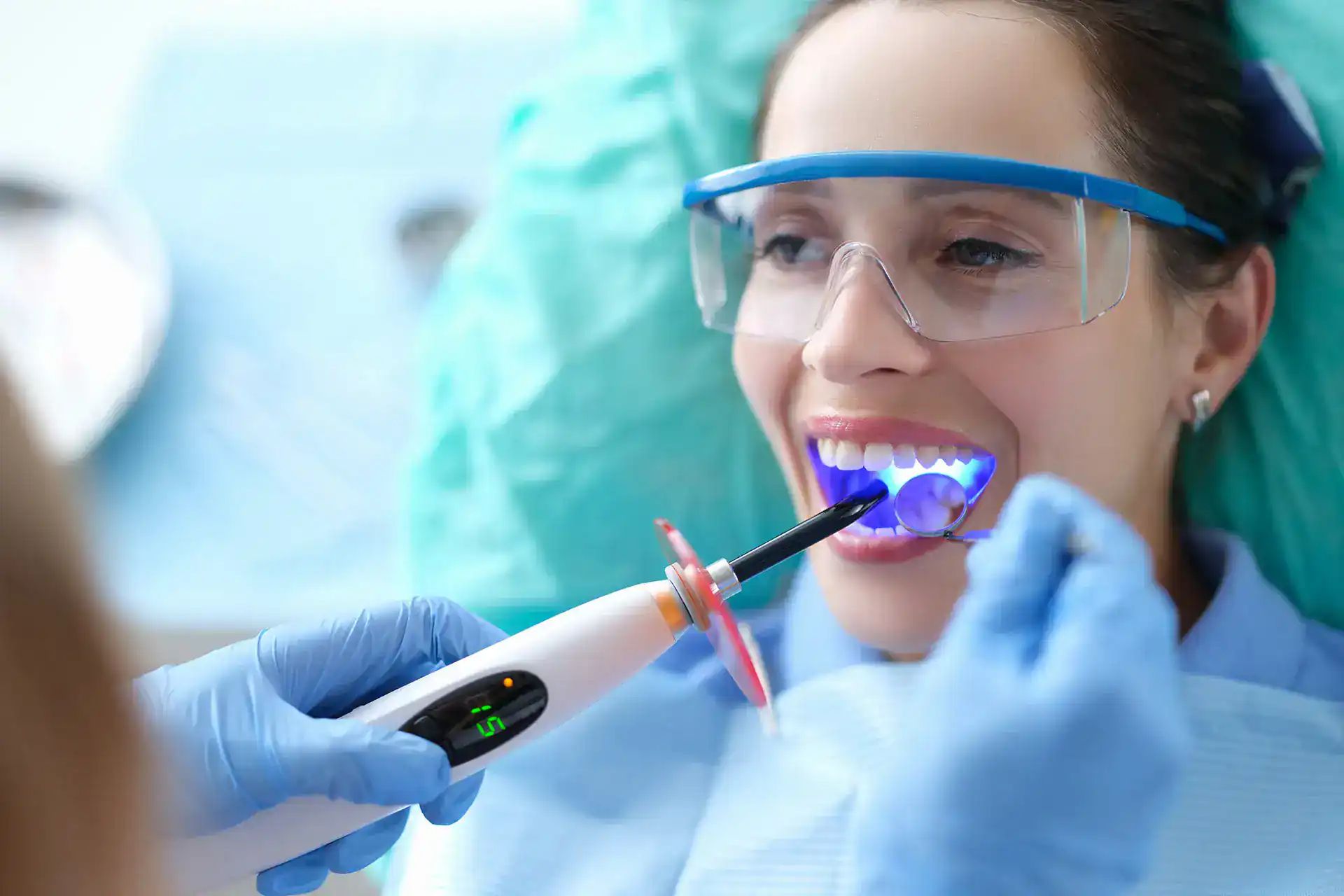
Most bonding is finished in one visit.
Matching the shade
Composite resin is matched to the color of your tooth.
Shaping
The resin is applied to the outside of the tooth and shaped by hand. Little or no enamel needs to be removed.
Hardening
A light sets the resin hard.
Polishing
It's smoothed and polished to match the rest of the tooth.
Looking after bonding
Day to day
- Brush twice a day and clean between your teeth daily.
- Go easy on coffee, tea and red wine, which stain resin.
- Don't bite your nails or chew hard food.
Call us if
- The bonding chips or breaks.
- It has picked up stain over time.
Cost, insurance and financing
Insurance
We accept most major dental insurance, including Maryland Healthy Smiles. What a plan pays toward this treatment varies, so call 410-284-1414 and ask about yours.
See the plans we acceptMonthly payments
You can spread the cost over monthly payments through Cherry, a patient financing company.
How financing worksQuestions about bonding
How long does bonding last?
It's generally redone sooner than a veneer, because composite picks up stain and can chip over the years.
Is any of my tooth removed?
Little or none, so the tooth isn't committed to anything permanent.
Bonding or a veneer?
For one small repair, bonding is a fair trade. Across several front teeth, veneers tend to last longer.
Can I whiten bonded teeth?
Whitening doesn't change the color of bonding, so the bonding may stop matching.
Related treatments
Sources: American Dental Association, MouthHealthy, "Veneers," "Teeth Whitening" and "8 Ways to Improve Your Smile"; MedlinePlus (U.S. National Library of Medicine), "Dental cavities," reviewed 5 February 2026. All checked 23 October 2026. Practice details are from this website. Last reviewed October 2026.