
Dundalk · Baltimore, MD
Dental Crowns in Dundalk
A cap over a tooth that can no longer take pressure on its own.
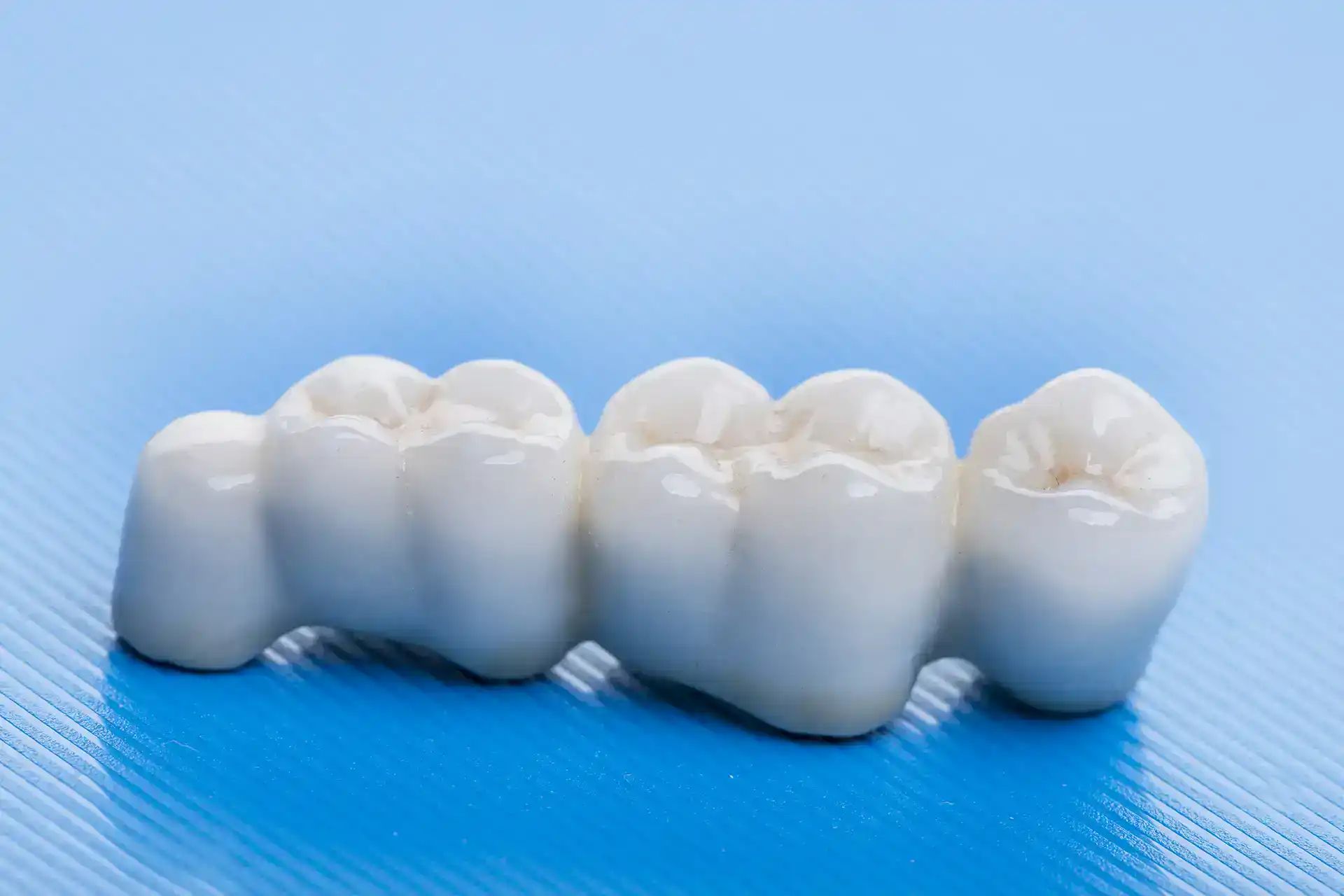
What a crown is
When a crown is used
What happens at your appointment
Looking after it
Not sure this is the right answer for you? Dr. Truong will tell you either way.
Request an appointmentDo you need a crown?
Dr. Truong will tell you whether a filling is enough or the tooth needs a crown. These are the usual reasons.
Common reasons
- A cavity so large there isn't enough tooth left to hold a filling.
- A tooth that is cracked, chipped, or worn down from grinding.
- A tooth that has just had a root canal.
- Anchoring a bridge, or covering an implant.
- A tooth that is badly shaped or discolored.
Worth talking through first
- You grind or clench your teeth. That can chip or crack a crown, and a night guard may help.
- The material. Metal lasts longest and rarely chips, but it doesn't look natural. Porcelain matches your teeth but can chip.
- A smaller cavity may only need a filling.
What happens, step by step
Most crowns take two visits.
Numbing and shaping
The area is numbed, any old filling or decay is removed, and the tooth is shaped so the crown will fit over it.
The impression
An impression of the tooth is taken, so the crown can be made to fit.
A temporary crown
A temporary crown protects the tooth while the permanent one is made.
Fitting the crown
At the second visit, the finished crown is checked for fit and bite, then cemented in place.
Looking after a crown
With a temporary crown
- Slide floss out to the side instead of lifting it up, which can pull the crown off.
- Avoid sticky food such as caramel, gum and bagels.
- Chew on the other side of your mouth.
Call us if
- The temporary crown comes off.
- Your bite feels wrong, or the tooth feels out of place.
- Swelling gets worse.
- The tooth hurts and over-the-counter pain relief doesn't help.
Cost, insurance and financing
Insurance
We accept most major dental insurance, including Maryland Healthy Smiles. What a plan pays toward this treatment varies, so call 410-284-1414 and ask about yours.
See the plans we acceptMonthly payments
You can spread the cost over monthly payments through Cherry, a patient financing company.
How financing worksQuestions about crowns
How long does a crown last?
Most last at least five years, and some last 15 to 20.
Can a tooth with a crown still get a cavity?
Yes, at the edge where the crown meets the tooth. Brushing twice a day and flossing once a day keep that edge clean.
Is it normal for the tooth to feel sensitive?
Some sensitivity to hot and cold is normal at first, and it should fade. It can also take a few days to get used to the crown.
Can I eat normally with a porcelain crown?
Yes, but don't chew hard candy or ice, which can chip it.
What if my crown comes loose?
Call us. A crown can come off if the tooth underneath is too weak.
Related treatments
Sources: MedlinePlus (U.S. National Library of Medicine), "Dental crowns," reviewed 14 October 2024; American Dental Association, MouthHealthy, "Crowns." Both checked 23 October 2026. Practice details are from this website. Last reviewed October 2026.